
Hardware & Software
Lithium battery cells have many great features: they are small and lightweight, with high capacity and fast charging, low self-discharge, no memory effect and low charging losses...
However, they also have one major drawback: they require sensitive handling as they cannot tolerate non-compliance with prescribed values such as temperature and current load. As a result, their service life can be substantially reduced and the safety of their use can be compromised.
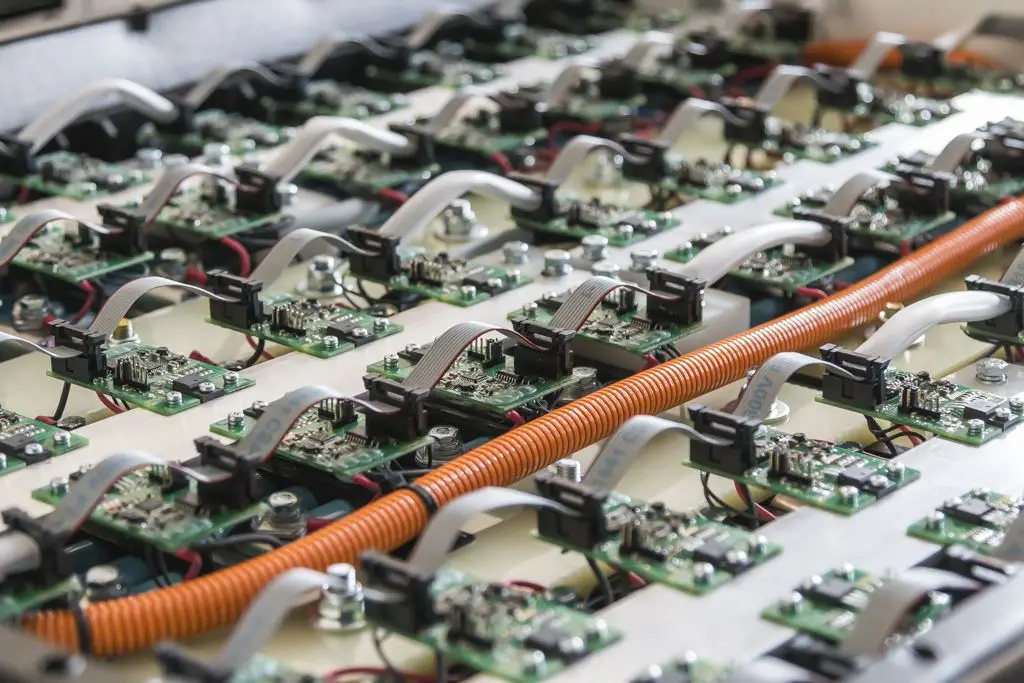
This is in practice Prevented by cell management using special hardware - BMS (Battery Management System).
In our case developed by us EVC BMS, which we dare to rank among the world's top.
If you've read the chapter on selecting the appropriate type of battery cellthe first thing that comes to mind is that each article must be managed in a different way - because each article is different. And yes, you are right.
The better the BMS can manage the cells, the longer their life and the higher and more balanced the battery performance.
In our battery cell development lab, we collect a huge amount of analytical data.
Based on this, we are developing our own BMS software that can monitor and manage the health of battery cells or their serial branches down to the smallest detail.
And thank you. to our BMS you have a guarantee maximum battery life and maximum performance.
All traffic data can be stored or sent using our BMS. Based on this data, our hardware and software is constantly being improved.
How does BMS actually work?
We have already mentioned above that a major disadvantage of lithium cells is their sensitivity - individual cells must not be charged or discharged below a certain limit, nor must they be operated only within a certain temperature range.
Therefore, within each battery module, our BMS monitors each cell or parallel branch: specifically temperature, voltage, state of charge, health assessment, etc.
Based on these parameters, the BMS controls and maintains the cells in good condition.
For example, it balances the voltage between the cells, reduces the power or shuts down the whole battery in case of overheating, etc.
The BMS has to work very fast, in practice the response times between measurement and action are in the order of milliseconds.
The quality of the BMS is critical to battery life and performance - consequently for your economy.
Please never forget this rule.